

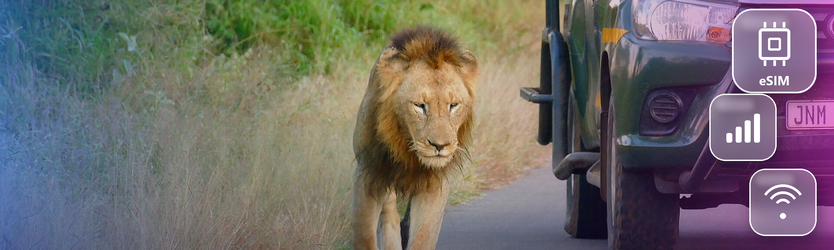
Here is the honest version, up front. A travel data plan works well in Nairobi and the market towns, and it works unevenly in the reserves. That is not a shortcoming of any provider. The reserves are protected land with very little built on them, which is the reason people fly halfway across the world to see them. Anyone promising you a full connection at a waterhole at dawn is selling you something they cannot deliver.
Once you accept that, the planning gets easy, because the fix is not better coverage. It is deciding what to download before you leave the tarmac road.
City and reserve, side by side
| Nairobi and the towns | The game reserves | |
|---|---|---|
| Typical coverage | Generally reliable | Patchy and unpredictable |
| Maps | Live navigation works | Download the area first |
| Messaging | Normal use | Expect delays, often hours |
| Calls | Fine | Camp office or satellite phone |
| Bookings and payments | Handled on the phone | Arrange before you travel out |
| Photo uploads | Straightforward | Wait until you are back in town |
The download checklist
Do these on hotel wifi in Nairobi, the evening before the drive out.
- Offline maps for the whole reserve area, not just the camp pin
- Your park entry confirmation and vehicle booking, saved as files rather than links
- Camp contact numbers written somewhere that does not need a connection
- Flight details for the return leg, including the domestic hop if you have one
- Any playlists or audio for the long drive
- A screenshot of your guide’s number and the meeting point
That list takes fifteen minutes and removes almost every problem a weak signal can cause on a safari. An eSIM Kenya plan then handles the parts of the trip that do have coverage, which is more of them than most people expect, and a Kenya data plan is the purchase to make before leaving Doha.
Nairobi asks quite a lot of your phone
The city end of a Kenya trip is ordinary modern travel. Ride-hailing between meetings and restaurants, live navigation through traffic that rewards it, mobile payments in places that no longer much want cash, and a constant stream of messages coordinating the next leg. Arriving with a working connection matters here in the same way it matters anywhere, and the routine for setting up before departure covers what to do the night before.
Anyone who has left the Gulf on roaming and come home to the bill knows the alternative. What roaming actually charges you for is worth reading once, properly, because the numbers do not behave the way people assume.
Where the connection genuinely stops
Inside the Maasai Mara, Amboseli or Tsavo, signal follows people and infrastructure. Near a camp, a gate or a main track, you will often have something. Out on a game drive at five in the morning, frequently nothing. Between reserves, along the graded roads, it comes and goes with no pattern you can plan around.
This is worth saying plainly rather than hedging. A guide with a radio is more useful out there than any phone, and the camps know it. Treat the days in the reserve as time away from the connection and the trip improves. Public networks at lodges are a different risk, and keeping a connection secure on hotel and lodge wifi is worth a look before you log in to anything that matters.
Buying it before you fly out of Doha
Setup happens at home over your own wifi. The installation steps take a minute, assuming your phone appears on the list of compatible handsets. If the whole idea is new, the basic explanation of the technology is the right starting point, and why a digital line beats swapping cards explains the part people find surprising: your Qatari number is never taken out, so it goes on receiving calls and messages for the whole trip.
For anyone going the other way, a Qatar plan does the same job for visitors arriving in Doha. And if Kenya is one stop in a longer run, the global plan range or a Middle East regional plan may fit the year better than a single country purchase. The Austria loop written for Qatari families shows how the same approach works on a European road trip.
Conclusion
Buy a small plan, install it at home, use it hard in Nairobi, and download everything you need before the reserve gate. Then put the phone away and watch the animals, because that is what you came for. Sizing advice sits in the plan comparison for eSIM users, and the 2026 roundup of travel plans is the wider view. Everything starts from the Numero eSIM home page.
Frequently Asked Questions
Will I have signal on a game drive?
Often not. Coverage in the reserves clusters around camps and main tracks, and a dawn drive well inside the park is likely to be quiet.
Is it worth buying a plan at all if the reserves are patchy?
Yes, because most of the trip is not in a reserve. Airports, Nairobi, transfers and the return leg all use it.
How much data does a safari trip need?
Less than a city holiday of the same length, since several days are spent largely offline. Start small and add more if needed.
Can my family reach me while I am in the park?
Messages will land when the signal returns, sometimes hours later. For anything urgent, leave the camp office number with them before you travel out.
Does the plan cover the domestic flight legs?
It covers the country, so it works at either end. Treat the flight itself as offline time and save boarding passes to your phone.