
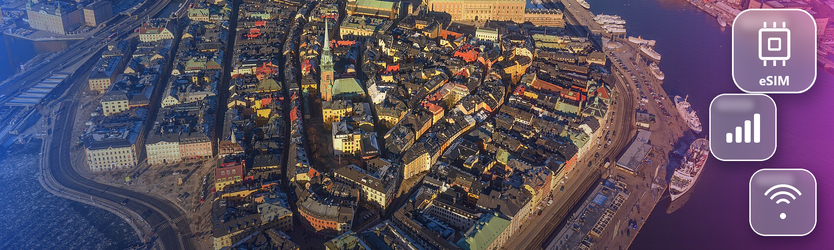
A winter visit to Sweden from Morocco is a lesson in daylight. In Casablanca or Rabat, a December afternoon still feels like an afternoon. In Stockholm, the sun is setting before three o’clock. Travellers visiting family, students arriving for a semester, and people chasing the northern lights all run into the same thing: the day is short, so the plan has to be tight, and the phone ends up doing most of the planning.
How much daylight you actually get
These are rounded figures for Stockholm. The north has far less; in Kiruna, the sun does not come back above the horizon until early January.
| Month | Daylight in Stockholm (approx.) | What that changes |
|---|---|---|
| October | About 10 hours | Still time for outdoor sights after lunch |
| November | About 7.5 hours | Outdoor plans move into the morning |
| December | About 6 hours | Dark by mid-afternoon; evenings run on bookings |
| January | About 7 hours | Cold and bright on clear days, very short |
| February | About 9 hours | Noticeably longer days, snow still likely |
| March | About 11.5 hours | Close to an even split of day and night |
What that means in practice: museum times, last boats, transport after dark and restaurant tables all get checked on the move, and more of the day happens in the dark than a visitor from North Africa expects.
Beliefs worth correcting before you go
Belief: the cold will ruin my phone. Fact: cold drains the battery quickly and can make a phone shut down with charge still left, but it recovers once it warms up. Keep it in an inside pocket and carry a small power bank.
Belief: you can see the northern lights from anywhere in Sweden in winter. Fact: they are seen mainly in the far north, around Lapland. Sightings further south happen but are uncommon. Even in the north, you need clear skies and some activity, which is why people check aurora and cloud forecasts through the evening.
Belief: short days mean less phone use. Fact: the opposite. With only a few hours of light, everything is scheduled more tightly, and checking opening hours and transport becomes constant.
Belief: a Europe regional plan is always the better buy. Fact: for a trip to one country, a country plan is simpler. Regional plans make sense once you cross borders.
Getting set up in Morocco
Install a Sweden data plan a day or two before you fly, while you are still on home wifi. The setup instructions cover each step. Older handsets should be checked against the supported devices list first.
Your Moroccan SIM does not need to come out. It keeps ringing for family calls and messages while the Swedish line handles the internet. Why a digital line makes that possible takes two minutes to read. Remember to switch off data roaming on the Moroccan line, or it can bill alongside the travel plan. The comparison of eSIM and roaming in Europe explains the difference in cost terms.
Arriving for a semester
Students from Morocco starting a term in Sweden often need a working phone from the first hour: messages from the university, housing arrangements, transport from the airport to a city they have never seen. Sorting out anything local can take a few weeks. A travel plan covers that gap, so the first days are spent settling in rather than hunting for a connection.
Where the data goes
Stockholm, Gothenburg and Malmö are well covered and very digital. Public transport, museum entry and many cafes lean on apps and cards rather than cash, so a working connection is useful from the airport onwards. In the far north, coverage is good in towns and resorts and thinner out in the wilderness, which matters on aurora trips that head away from the lights of town. Download the route and the pickup point before you leave.
An eSIM Sweden plan covers all of it, since it is a country plan. For sizing advice, the guide to data plans sets out the reasoning, and travelling with an eSIM day to day covers the habits.
If the trip crosses borders
Plenty of Nordic trips include Norway, and some add Finland for Lapland. A Norway plan handles the first. For two or more countries, the regional Europe plans are worth comparing, and the four questions for picking a Europe eSIM and how a phone changes networks at a Nordic border help with the choice.
Conclusion
Plan around the daylight, keep the phone warm, and check the forecast if the northern lights are on the list. Install before leaving Morocco and the rest follows. Other trips from Morocco are covered in the Schengen trip guide and the family visit to Germany. Visitors going the other way can use a Morocco plan, and frequent travellers may prefer the global range.
Frequently Asked Questions
How many hours of daylight does Stockholm get in December?
About six hours around the shortest day. Further north, the sun barely rises for several weeks.
Will my phone work in the cold?
Yes, but the battery drains faster. Keep it close to your body and carry a power bank.
Can I see the northern lights from Stockholm?
Occasionally. Your chances are much better in the far north, on a clear night.
Can family in Morocco still call me?
Yes. The Moroccan line is left in place and rings as normal; just switch off its mobile data abroad.
Do I need a Europe plan for Sweden alone?
No. A country plan is the simpler choice for a single-country trip.