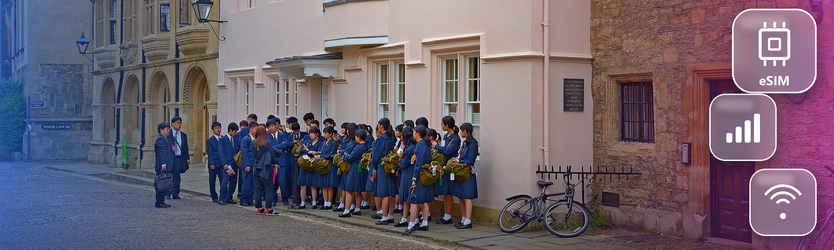
Many students who move abroad for a semester or a year end up with a local mobile line eventually, once they have an address and a bank account. A travel Data eSIM still has a job in that year. It covers the weeks before the local line exists, the weekend trips across borders, and the flights home, and it lets the number from home stay in the phone for family the whole time. That is the practical case for an eSIM for students abroad: not a replacement for everything, but the piece that fills the gaps.
Five data moments in a study year
| Stage of the stay | What you need | What changes |
|---|---|---|
| Before you fly | A data plan installed at home, offline maps of the campus area | Nothing yet; the home line is still your main line |
| The first weeks | Data for housing, enrolment, banking appointments and transport | You are online from the arrival gate, before any local paperwork is done |
| The term | Data on the move; wifi on campus and at home | Some students sign up for a local plan here; others keep adding data |
| Breaks and side trips | Data in a second or third country | A local plan from your study country may not cover it |
| The trip home and the final weeks | Data while you hand back keys and close accounts | The local plan may already be cancelled |
The first and last stages are where students most often find themselves without a connection. On arrival, a local line usually needs things you do not have yet, such as an address. At the end, many cancel it before they have finished packing, then spend the last week hunting for wifi to check in for the flight home.
A student’s year is not a long holiday
The habits are different, and so is the way data gets used.
| Habit | Holiday traveller | Student abroad |
|---|---|---|
| Wifi | Hotel wifi in the evenings | Campus and flat wifi for most of the day |
| Mobile data | Heavy, every day, for a short time | Light, on the move, for many months |
| Number from home | Stays quiet for a week | Needed all year for family and accounts at home |
| Travel | One destination | Weekend trips to neighbouring countries |
That last row matters more than most students expect. A train weekend in a neighbouring country is a normal part of a year abroad, and a local plan from your study country may charge for it or not cover it at all. Students in Europe often find a regional Europe plan simpler for those weekends than juggling single-country purchases.
Keeping the number from home
The phone can carry two lines at once. The SIM from home stays installed, with its data roaming switched off, so parents, siblings and old friends can still call and send messages on the number they know. The travel eSIM, or later a local plan, handles the internet. Nobody at home has to learn a new number, and nothing important tied to the home line goes quiet for a year. How an eSIM differs from a physical SIM explains why one handset can hold both.
The first weeks: the stage with the most at stake
This is when a working connection does the most good. You may need maps to find a flat viewing, messages with a landlord, an online enrolment form and directions to a bank appointment, all before you have a local line. The site has two country examples of exactly this stage: the guide for Jordanian students starting university in Germany walks through the chain of registration, bank and contract, and the guide for Moroccan students heading to France, Belgium or Spain covers the same weeks for three more countries.
For the setup itself, install the plan for your study country before you fly, for example Germany, France or the United Kingdom. The data eSIM installation steps take about a minute on home wifi. Check first that your phone is on the list of supported devices and is not locked to a network.
Adding data across a long stay
A semester is longer than any holiday plan, so expect to buy data more than once. When a plan runs low, depending on the package, you may be able to buy a top-up, or you may need to buy a new plan. Either way, do it before your balance runs out, because installing a new plan needs a connection. Students who stay a full year often settle into a rhythm of buying a new block of data at the start of each month or before each trip, which is easier to budget for than a surprise mid-week. The guide to topping up an eSIM mid-trip covers both cases, and the guide to choosing plan sizes helps you avoid paying for more than campus wifi leaves you needing.
Conclusion
Plan the year as five stages, not one. Install a data plan before you fly, keep the home number in the phone, decide during the term whether a local plan makes sense, and keep a travel plan ready for the trips and final weeks a local plan does not cover. Plans for every study destination are on the Numero eSIM home page.
Frequently Asked Questions
Can international students use an eSIM?
Yes, as long as the phone is eSIM-capable and carrier-unlocked. Put the plan on it at home, and it connects on arrival.
Should a student get a local SIM or keep a travel eSIM?
Many do both at different stages. A travel eSIM covers the first weeks, side trips and the final weeks; a local plan can make sense for the middle of a long stay.
Will my number from home keep working while I study abroad?
Yes. Leave that SIM installed and family can still ring and text you on it; just keep its roaming data switched off for the whole year.
How much data does a student need?
Usually less than a tourist, since campus and home wifi cover most of the day. Start with a modest plan and add more as you learn your habits.