

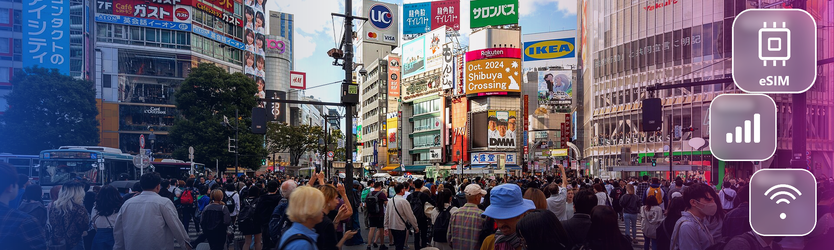
Japan produces a specific kind of traveler confusion. It is the most technologically fluent country most people will ever visit, and it still hands you a paper ticket, prefers cash in half its restaurants, and posts signs your translation app has to earn. The eSIM for Japan question usually gets asked a week before flying; the notes below explain why the answer shapes the whole trip, gathered the way travelers actually learn them, one small surprise at a time.
The train decides your day. Japan’s rail network is the itinerary. Route apps tell you the platform, the car to board for the fastest exit, and the transfer window down to the minute, and the network is punctual enough that the information is worth obeying. Without data, you are reading wall maps in a station the size of a district. With it, a three-line transfer becomes a calm eleven-minute walk. Coverage along the main corridors and in cities is generally excellent, so this is one country where the phone works as hard as the trains do.
Cash is still king, and the king moves around. Plenty of small restaurants, shrines, and market stalls take cash only, which means the practical daily question is not whether to carry cash but where the nearest machine that accepts foreign cards is hiding. That is a search, several times a day, in a city you do not know. Small task, constant task, all data.
The menu is a photograph. Camera translate was built for this country. Handwritten menus, ingredient lists, ticket machines outside ramen shops with forty unlabeled buttons: point the camera and the wall of characters becomes choices. It is the single feature travelers report using most, and while offline translation packs exist, the live version reads handwriting and context far better.
Addresses are a local art form. Japanese addresses describe blocks rather than streets, and even locals navigate by landmarks and pins. The pin your hotel sends you is not a convenience; it is the address. Live maps close the gap so completely that most visitors never learn there was a gap.
Quiet is infrastructure. Phone calls on trains are a genuine social offense, so the country runs on silent coordination: messages, shared locations, and the group chat deciding dinner while everyone pretends to look out the window. A trip here uses more messaging data and less voice than almost anywhere, which suits a Data eSIM perfectly.
What the notes add up to
Every note points the same direction. Japan rewards the traveler whose data works from the first minute, because the country’s systems assume connection and its charming exceptions, the cash, the paper, the handwriting, are exactly what the connection helps you handle. The preparation is one quiet evening before the flight: buy the Japan Data eSIM at Numero eSIM, scan through the installation steps on your own wifi, and let the supported devices page clear your handset if it has never carried an eSIM. Your home SIM stays in the phone doing its usual quiet job, calls and texts, with its data roaming switched off so the trip never runs up a second tab. Travelers folding Japan into a wider Asian swing can compare the regional Asia options before buying per country.
Sizing for a Japan trip
The usage pattern here is distinctive: heavy on maps, translation, and messaging, light on calls, with photo traffic that spikes daily. That profile fits a mid-sized plan for a typical ten-day visit, stretched further by hotel wifi handling the evening photo backup. If the trip runs long or the camera roll runs wild, a top-up from the app takes about a minute, which is shorter than most Japanese train transfers. The plans overview helps with the starting size, and the travel setup guide covers every screen for first-timers, with the eSIM basics one step earlier still.
The country that rewards preparation most
Some destinations forgive an offline phone. Japan simply routes around you, politely, while you stand in a station holding a paper map. Arrive with the data working and the most organized country on earth starts working for you instead. When the trip after this one starts forming, the international travel eSIM guide is the shortlist builder.
Frequently Asked Questions
When should I set up the eSIM for a Japan trip?
A day or two before flying, on home wifi. Searches for eSIM Japan spike every autumn as the travel season builds, and the setup itself never changes: install at home, land, switch off airplane mode, and the plan connects on its own.
Is coverage good outside the big cities?
Along the main rail corridors, in towns, and around the sights, generally excellent. Deep mountain valleys and remote coastal stretches can thin briefly, which downloaded offline maps absorb. Japan is among the easier countries to stay connected in.
Does my home number keep working while I am in Japan?
It does. The physical SIM stays in the phone with its line open, so calls and texts arrive as usual. Only its data roaming goes off, handing the internet entirely to the Data eSIM.
How much data does a ten-day Japan trip need?
Maps, translation, and messaging run steadily but lightly; daily photo sharing is the variable. A mid-sized plan suits most visitors, with hotel wifi carrying the heavy evening uploads and an in-app top-up covering any surprise.