

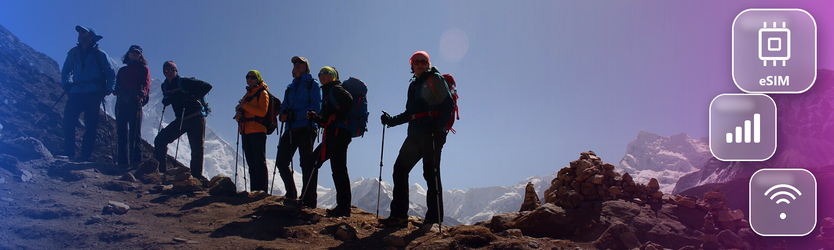
For travellers from India, Nepal is close enough to feel familiar and different enough to plan for properly. Some people fly into Kathmandu for a long weekend of temples and good food. Others cross overland and spend two weeks walking into the mountains. Both trips start the same way, with a phone that works in the valley, and both need to accept one fact before anything else: on the high trails, the signal eventually runs out.
That is not a flaw to fix. It is the nature of the terrain, and planning around it is simple once you know where the line falls.
Coverage by altitude and stage
| Altitude or stage | Coverage | What to download first |
|---|---|---|
| Kathmandu valley and the old towns | Generally reliable | Nothing special, use it normally |
| Pokhara and the lake towns | Generally reliable | Trek permits and the trailhead transfer |
| Lower trail villages and lodges | Comes and goes | Offline maps for the full route, lodge contacts |
| High passes and base camps | Rare to none | Everything: maps, bookings, emergency numbers |
| Return to the valley | Reliable again | Onward flights and the ride to the border or airport |
Before you leave India
Install a Nepal data plan at home, on wifi, a day or two before travel. The setup route takes about a minute, and Android users have a step-by-step setup guide with the menu paths for each maker. If you have not used one before, what an eSIM is covers the basics, and the list of compatible phones settles whether yours qualifies.
Your Indian SIM stays in the handset. That matters on this trip in particular, since family, work and most of your accounts sit on that number, and it keeps receiving calls and texts while the travel line handles data. What you should do is switch off data roaming on the Indian line, otherwise it can bill in parallel. How roaming charges add up explains the risk in plain terms.
The valley end of the trip
Kathmandu and Pokhara run like any busy South Asian city. Ride apps, maps through lanes that no map quite captures, restaurant bookings, and the constant back and forth of a group deciding where to eat. This is where most of your data goes, and it is where an eSIM Nepal plan earns its keep. The habits of travelling with a data plan apply here exactly as they would anywhere.
Where the signal stops, and why that is fine
This section is the honest one, and it is the part to read twice if you are trekking.
Mobile networks follow people. The lower villages on the popular routes often have some signal because lodges, porters and trekkers bring demand. As the trail climbs, settlements thin out, and so do the masts. Near the high passes and base camps you should plan as if you will have nothing at all. Some days you will be pleasantly surprised. Do not build the trip around that.
In practical terms, that means three things:
- Everything you need on the trail is on the phone as a file before you leave the last reliable town.
- Your family knows your route and the date you expect to be back in coverage, so two days of silence does not frighten anyone.
- Your guide or lodge holds the emergency contact details, because a phone with no signal is not a safety plan.
The quiet days can turn out to be the best part of the whole trip. The phone becomes a camera and a map, and that is enough.
Sizing the plan
Mountain days use almost no data, so a trekking trip needs less than its length suggests. A valley-only trip uses more per day but lasts fewer days. Either way, start modest and add to it later; the guide to choosing data plan sizes sets out why. If Nepal is one leg of a longer route through the region, the regional Asia plans or the global range may suit better.
Conclusion
Use the plan hard in the valley, download everything before the trail steepens, and tell people at home when to expect silence. The mountains do the rest. Readers who also make the trip in the other direction may find an India plan and the Gulf to India family trip useful, and cheap calls home are covered in calling India, Bangladesh and Nepal. For a wider look at plan options, see the 2026 travel eSIM guide or browse every plan from the Numero eSIM home page.
Frequently Asked Questions
Is there coverage at Everest or Annapurna base camp?
Plan as though you will not. A few high points pick up occasional signal, but it is not something to build the trip on.
Can I keep my Indian number active in Nepal?
Yes. The Indian line is left untouched and still rings as normal. Turn off its data roaming so only the travel line uses data.
How much data does a two-week trek need?
Less than a two-week city trip, since many trail days are offline. Buy a modest plan and add more in the valley if needed.
Should I install the plan before crossing the border?
Yes. Setup needs an internet connection, which is easiest at home before you travel.
What should be saved offline before trekking?
Route maps, permits, lodge bookings, your guide’s details, and the emergency contacts for the area.